How to Log In to 2FA-Protected Accounts
Introduction
Two-factor authentication has become a standard way to protect online accounts from unauthorized access. While it greatly improves security, the extra step can sometimes create confusion during login, especially for new users or when switching devices.
Understanding how to login to 2FA added accounts ensures you maintain access without frustration while keeping your information safe. This applies to social profiles, email services, and many other platforms.
This guide provides clear instructions, explanations of different methods, troubleshooting advice, and best habits. You'll learn everything needed to handle 2FA confidently in daily use.
Quick Answer
To login to a 2FA added account, enter your password first, then provide the verification code sent to your phone, generated by an authenticator app, or obtained through another approved method. Keep backup codes handy for situations without phone access.
What Is How to Login to 2FA Added Accounts?
Logging into accounts with two-factor authentication involves a two-step process: first confirming your password, and second verifying your identity through an additional factor like a temporary code.
This method ensures that even if someone obtains your password, they still need the second element — usually something you possess — to gain entry. The login flow is designed to be straightforward once set up, balancing security with usability.
Why Is How to Login to 2FA Added Accounts Important?
Extra verification dramatically reduces successful hacking attempts on accounts. However, poor understanding of the login process can lead to lockouts or reliance on less secure alternatives.
Mastering these logins supports consistent access across devices while upholding strong protection. For users managing multiple accounts, such as social media or business tools, smooth 2FA handling saves time and prevents disruptions.
It also prepares you for recovery scenarios and helps maintain account health over the long term.
How Does How to Login to 2FA Added Accounts Work?
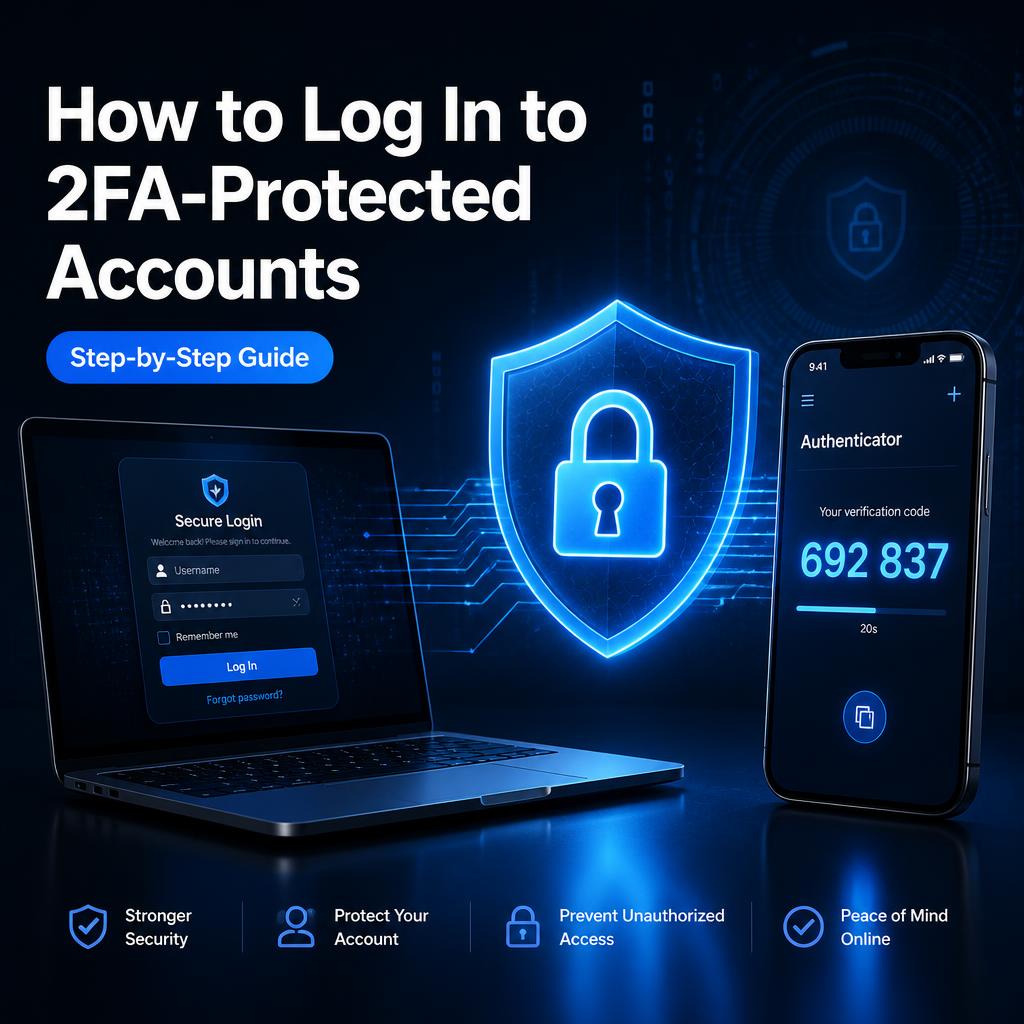
The general process includes these steps:
- Enter Credentials: Visit the login page and input your username or email and password.
- Receive Prompt: The service detects 2FA is enabled and requests the second factor.
- Obtain Code: Depending on setup, check your SMS messages, open an authenticator app, or use a hardware key.
- Submit Verification: Enter the code within the time limit and confirm.
- Access Granted: Once validated, you reach your account dashboard.
- Optional Remember Device: Some platforms offer to skip future 2FA on trusted devices.
Different services may vary slightly in interface but follow this core sequence.
Types of 2FA Methods
- SMS-Based: Codes sent via text message to your phone number.
- Authenticator Apps: Time-based codes generated offline by apps like Google Authenticator.
- Email Verification: Backup codes delivered to a registered email address.
- Hardware Keys: Physical devices that plug in or connect wirelessly.
- Biometric Options: Fingerprint or face recognition on supported devices.
- Push Notifications: Approvals sent to a trusted mobile app.
Key Features
- Time-Sensitive Codes: Most methods expire quickly for added protection.
- Backup Codes: One-time use codes provided during setup.
- Device Trust Options: Reduce repeated prompts on familiar devices.
- Multiple Recovery Paths: Alternative verification methods if primary fails.
- Activity Logging: Records of successful and failed login attempts.
- Setup Wizards: Guided processes for initial configuration.
- Cross-Platform Support: Works across computers, phones, and tablets.
Advantages
- Significantly stronger protection than passwords alone.
- Quick recovery options when set up properly.
- Widely supported across major services.
- Minimal ongoing cost for most methods.
- Builds user confidence in account safety.
- Helps meet security requirements for business accounts.
- Encourages better overall password habits.
Limitations
- Requires access to a second device or method during login.
- SMS can face delivery delays or interception risks in some areas.
- App-based methods need initial setup time.
- Potential lockout if all verification options become unavailable.
- Slight added time to each login process.
- Not all services support every 2FA type.
- Backup codes must be stored securely.
Common Use Cases
- Social Media Profiles: Protecting accounts on platforms like Facebook or Instagram.
- Email Services: Securing primary communication channels.
- Banking and Finance Apps: Safeguarding sensitive financial data.
- Work Accounts: Accessing company systems remotely.
- E-commerce Marketplaces: Preventing unauthorized purchases.
- Streaming Services: Maintaining family or personal subscriptions.
- Multiple Account Management: Handling various profiles efficiently.
Best Practices
Store backup codes in a safe, encrypted location separate from your devices. Use authenticator apps over SMS when possible for better security. Keep your phone number and recovery email updated. Test recovery methods periodically. Avoid sharing codes with anyone. Consider hardware keys for high-value accounts. Log out from shared devices and review login history regularly.
When managing several accounts, organize methods clearly to prevent confusion.
Common Mistakes
- Losing access to the phone number linked for SMS codes.
- Failing to save backup codes during initial setup.
- Entering codes after they expire.
- Using public Wi-Fi without additional precautions.
- Disabling 2FA temporarily without re-enabling it.
- Ignoring login alerts for suspicious activity.
- Relying on a single recovery method without backups.
Comparison
2FA login processes differ from traditional password-only logins and emerging passwordless methods.
Aspect2FA Login ProcessPassword OnlyPasswordless (e.g., Passkeys)Security Level | High with two steps | Basic | Very high with modern cryptography
Convenience | Extra step but familiar | Fastest | Often seamless
Setup Required | Moderate | Minimal | Device-dependent
Recovery Options | Multiple methods | Password reset | Biometrics or hardware
Vulnerability | Resistant to password theft | High to leaks | Lower overall risks
Availability | Very widespread | Universal | Growing but not everywhere
2FA strikes an excellent balance for most users today.
Frequently Asked Questions
What should I do if I don't receive my 2FA code?
Wait a moment, request a new code, check spam folders, or try an alternative method like backup codes.
Can I login to 2FA accounts without my phone?
Yes, using previously saved backup codes or other configured recovery options.
How do I set up 2FA initially on an account?
Go to security settings, find the two-factor option, and follow the platform's instructions to link your method of choice.
Are authenticator apps better than SMS codes?
Generally yes, as they work offline and resist SIM swapping attacks.
What happens if I lose my authenticator app access?
Most services provide backup codes or account recovery flows using other verified information.
Does 2FA work on all devices?
It works across most modern browsers and apps, though setup may vary slightly.
How can I remove 2FA from an account?
Access security settings and disable the feature, though this is not recommended for important accounts.
Is it safe to remember devices for 2FA?
Yes on personal trusted devices, but avoid it on public or shared computers.
Do all social media platforms support 2FA?
Most major ones do, including options for various verification methods.
How often should I update my 2FA settings?
Whenever you change phones, emails, or notice unusual account activity.
Key Takeaways
- Two-factor authentication requires both knowledge and possession factors.
- Preparation with backup options prevents most access problems.
- Different methods suit various user needs and security levels.
- Regular testing and updates maintain effectiveness.
- Understanding the process reduces login frustrations.
- Combining 2FA with other habits creates comprehensive protection.
Conclusion
Handling logins for accounts with two-factor authentication becomes straightforward with practice and proper preparation. These steps not only keep your accounts secure but also build confidence in managing your digital presence. Staying informed about your chosen methods ensures reliable access whenever you need it.
Related Articles
Two-Factor Authentication Explained
How to Secure Social Media Accounts
Facebook Account Recovery Guide
Best Password Management Tips
Protecting Multiple Online Accounts
Related Product Pages
Browser Security Tools
Internet Security Solutions
VPN for Secure Access
Related Posts
How to Secure Your Online Accounts in 2025
Why Account Security Matters In today’s digital world, online accounts contain personal information, financial data, and communication history. Whether you manage social media accounts, business accounts, or personal profiles, keeping them secure is essential. A strong and secure account protects you from hacking, phishing, data loss, and unauthorized access.
How to Use Reddit Safely Without Getting Banned
Learn how to use Reddit safely and avoid account bans. Follow simple rules and best practices to keep your account secure.
How to Check if Your Email Has Been Hacked (Step-by-Step Guide 2026)
Worried your email might be hacked? Learn how to check if your email has been compromised and what to do immediately to secure your account in 2026.